History
View all in History
Umu Ezechime and the Making of Anioma History
By Adim Abuah on January 20, 2026
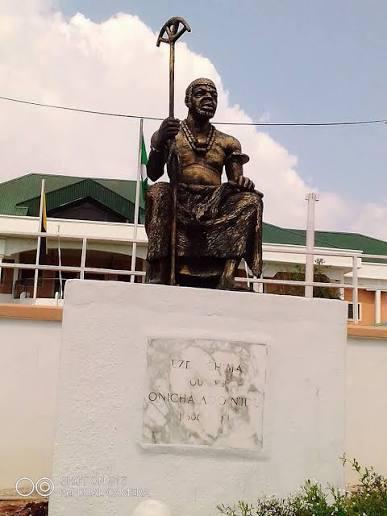
𝐂𝐡𝐫𝐨𝐧𝐨𝐥𝐨𝐠𝐲, 𝐎𝐫𝐢𝐠𝐢𝐧𝐬, 𝐈𝐧𝐟𝐥𝐮𝐞𝐧𝐜𝐞, 𝐋𝐚𝐧𝐠𝐮𝐚𝐠𝐞, 𝐚𝐧𝐝 𝐭𝐡𝐞 𝐐𝐮𝐞𝐬𝐭𝐢𝐨𝐧 𝐨𝐟 𝐈𝐝𝐞𝐧𝐭𝐢𝐭𝐲
𝑩𝒂𝒄𝒌𝒈𝒓𝒐𝒖𝒏𝒅
The history of Anioma has long been shaped by borderland encounters, cultural
negotiations, and competing narratives of origin. Nowhere is this complexity more
pronounced than in the historiography of Umu Ezechime, a cluster of communities spread
across present-day Aniocha North and South in Delta State, with historical extensions
across the Niger to Onitsha and its hinterland. For decades, Umu Ezechime has occupied a
central place in debates about Anioma identity: Were these communities founded by
migrants from the ancient Benin Kingdom? Are they Igbo in origin with later Benin political
influence? Or do they represent a deeper synthesis—an amalgam of cultures forged at a
historical frontier?
These questions are not merely academic. In Anioma, origin narratives inform kingship
legitimacy, ritual authority, inter-community relations, and contemporary political
identity. Yet the available historical accounts—colonial ethnographies, indigenous
monographs, oral traditions, and modern scholarship—do not converge neatly into a single
story. Instead, they present layered and sometimes contradictory evidence: Benin-style
royal regalia alongside Igbo language; Edo-derived court rituals embedded in Igbo social
organization; migration traditions pointing westward coexisting with linguistic realities
that point east.
This article adopts an editorial position shaped by accumulated research rather than
allegiance to any single tradition. Drawing on oral histories, ethnography, linguistics, and
comparative West African history, it argues that Umu Ezechime is best understood as a
historical amalgam of Benin and Igbo cultural forces, with decisive and undeniable
ethnolinguistic grounding in the Igboid language family. Benin influence is real, visible,
and consequential—particularly in kingship and ritual symbolism—but it does not, on its
own, sustain a claim of wholesale Benin origin. The goal here is not to diminish Benin’s role
nor to erase Igbo agency, but to situate Umu Ezechime accurately within the frontier
dynamics that shaped Anioma as a whole.
𝑬𝒂𝒓𝒍𝒚 𝑩𝒆𝒏𝒊𝒏–𝑰𝒈𝒃𝒐 𝑭𝒓𝒐𝒏𝒕𝒊𝒆𝒓 𝑰𝒏𝒕𝒆𝒓𝒂𝒄𝒕𝒊𝒐𝒏𝒔: 𝑻𝒉𝒆 𝑰𝒔𝒔𝒆𝒍𝒆-𝑼𝒌𝒖 𝑵𝒐𝒅𝒆 (𝒄. 1200–1400)
Early traditions linking Umu Ezechime to Benin political expansion are most clearly
preserved in the historical memory and royal institutions of Issele-Uku. It is important,
however, to emphasize that Issele-Uku does not stand in for Umu Ezechime as a whole, nor
did Umu Ezechime emerge as a single, centralized polity during this period. Rather, Issele
Uku appears to have functioned as one of the earliest and most prominent contact points—
or nodes—through which Benin political authority, ritual symbolism, and court culture
interacted with Igbo-speaking communities in Anioma.
This frontier interaction is most visibly expressed in royal and court symbols preserved in
Issele-Uku, which bear strong resemblance to Benin palace traditions and court
aesthetics. Among these are the use of coral beads worn exclusively by the Obi and senior
palace chiefs, reflecting Benin’s association of coral with sacral kingship and royal
exclusivity. The presence of ceremonial swords resembling the Benin Ada and Eben,
employed during coronations and major palace rituals, further underscores the borrowing
of Benin political symbolism rather than Igbo republican norms. In addition, the Obi’s
public appearances beneath a royal umbrella or state canopy, a visual language closely
associated with Benin court culture, mark kingship as sacred and ritually elevated.
These symbols are reinforced by a palace-centered hierarchy of titled chiefs, whose roles
and ranking echo Benin court organization more than the diffuse leadership patterns
typical of many Igbo communities. Brass and bronze ritual objects—materials historically
associated with Benin prestige culture—also feature in palace rituals, suggesting
acquisition through Benin networks rather than local production during the early period.
Within this context, traditions situate the establishment of Isi-Ille-Uku—later Issele-Uku—
around c. 1230 AD, during the consolidation of Benin monarchy following the reign of Oba
Eweka I. Benin influence is remembered to have been projected eastward through frontier
settlements administered by officials bearing titles such as Ogie. Ogie Uwadiae is said to
be the first appointed duke or governor, reflecting Benin’s broader strategy of extending
authority through symbolic incorporation and ritual legitimacy rather than mass migration
or territorial occupation. The replication of Benin-style quarters, court rituals, and
political titles in Issele-Uku is often cited as evidence of this phase.
In this arrangement, Issele-Uku functioned as a Benin-aligned polity embedded among
Igbo-speaking populations. Its rulers bore Benin regalia, and succession disputes were
occasionally resolved with reference to Benin authority, reinforcing symbolic dependence
on the Oba.
A critical episode in this account is the reign of Ogie Osamala, whose death without a male
heir precipitated a succession crisis. Benin intervention followed, resulting in the
installation of Prince Ise, described in Benin tradition as a member of the royal family,
reportedly endorsed by Oba Ozolua in the late fifteenth or early sixteenth century. Prince
Ise’s elevation marked a transition from the Ogie system to an Obi kingship, signaling
partial indigenization of authority while retaining Benin ritual legitimacy.
It is within this dynastic sequence that Eze Chima emerges—often described as a
descendant of Prince Ise and a central figure in the later dispersal traditions of Umu
Ezechime.
Crucially, the presence of these Benin-derived royal symbols in Issele-Uku does not imply
wholesale Benin settlement or ethnic replacement. Instead, they point to selective
adoption of Benin kingship aesthetics and legitimacy frameworks within an already Igbo
speaking society. Other Umu Ezechime settlements—such as Obior, Obomkpa, and the
Onicha communities—developed along different timelines and absorbed Benin influence
unevenly, often indirectly through Issele-Uku or later inter-Ezechime diffusion rather than
direct frontier administration.
Understanding the Benin frontier phase in this way—as a localized and symbol-heavy
interaction rather than a universal origin—allows for a more accurate reading of Umu
Ezechime history. It acknowledges Issele-Uku’s historical prominence as a frontier
interface while preserving the polycentric development, ethnolinguistic continuity, and
internal diversity that characterize Umu Ezechime as a whole.
𝑬𝒛𝒆 𝑪𝒉𝒊𝒎𝒂 𝒂𝒔 𝒂 𝑭𝒓𝒐𝒏𝒕𝒊𝒆𝒓 𝑭𝒊𝒈𝒖𝒓𝒆 (𝒄. 1500–1600)
The most historically productive way to understand Eze Chima is not as a singular origin
myth but as a frontier figure operating within overlapping political, ritual, and cultural
spheres
𝗜𝗻𝗰𝗼𝗿𝗽𝗼𝗿𝗮𝘁𝗶𝗼𝗻 𝗶𝗻𝘁𝗼 𝗕𝗲𝗻𝗶𝗻 𝗣𝗼𝗹𝗶𝘁𝗶𝗰𝗮𝗹 𝗦𝗽𝗮𝗰𝗲.
Benin palace tradition provides a crucial chronological anchor. According to senior palace
testimony, the powerful title of Iyase—commander-in-chief and prime minister—had fallen
vacant for a period. During the reign of Oba Orhogbua, son of Oba Esigie and grandson of
Oba Ozolua (early to mid-sixteenth century), the title was revived and conferred upon the
Oba’s trusted associate named Eze Chima.
Significantly, palace tradition maintains that Eze Chima was not ethnically Benin. Yet, upon
assuming the Iyase office, he became so influential that his name became embedded in
Benin institutional memory. The greeting Lavbieze, still associated with the Iyase title,
alludes directly to Eze Chima, reflecting how the office absorbed the identity of a notable
office-holder.
This testimony reframes Eze Chima not as a Benin founder, but as an outsider incorporated
into the highest level of Benin statecraft.
𝗙𝗿𝗼𝗻𝘁𝗶𝗲𝗿 𝗣𝗼𝘄𝗲𝗿, 𝗣𝗿𝗲𝘀𝘁𝗶𝗴𝗲, 𝗮𝗻𝗱 𝗧𝗲𝗻𝘀𝗶𝗼𝗻
As Iyase or high palace chief, Eze Chima occupied a liminal position—powerful yet
vulnerable. Oral traditions recount growing tensions between Eze Chima’s household and
elements of the Benin royal family, particularly involving the Oba’s mother Asije and the
war lord Gbunwala. These conflicts culminated in violence against Eze Chima’s followers,
creating conditions of insecurity and political hostility.
Whether these episodes are remembered as personal affronts, political rivalry, or ritual
transgression, they reflect a broader historical pattern: frontier elites incorporated into
imperial systems often faced precarious positions once court alliances shifted
𝗗𝗲𝗽𝗮𝗿𝘁𝘂𝗿𝗲 𝗳𝗿𝗼𝗺 𝗕𝗲𝗻𝗶𝗻 𝗮𝗻𝗱 𝗘𝗮𝘀𝘁𝘄𝗮𝗿𝗱 𝗠𝗼𝘃𝗲𝗺𝗲𝗻𝘁
By the mid-to-late sixteenth century, Eze Chima is remembered to have left Benin with his
people, seeking safety beyond the reach of Benin authority. This departure marks the
crucial transition from Benin-centered memory to Anioma-centered dispersal traditions.
Groups associated with Eze Chima settled progressively farther east and north:
• Some stopped at Agbor (Agbo), considered a safe distance from Benin
influence.
• Others moved to Issele-Uku, Obior, Onicha-Ugbo, and Onicha-Olona,
consolidating settlements that later formed the Umu Ezechime cluster.
• A further group crossed the Niger River, settling at Onicha Ado n’Idu
(Onitsha), where Eze Chima’s eldest son Oreze is remembered as a leading
figure.
European-era historians later estimated that the final consolidation of Onitsha
as a major settlement occurred in the seventeenth century, consistent with
this sequence of gradual movement rather than a single mass migration.
𝗞𝗶𝗻𝗴𝘀𝗵𝗶𝗽, 𝗜𝗻𝘀𝘁𝗶𝘁𝘂𝘁𝗶𝗼𝗻𝘀, 𝗮𝗻𝗱 𝗖𝘂𝗹𝘁𝘂𝗿𝗮𝗹 𝗘𝘅𝗰𝗵𝗮𝗻𝗴𝗲
The legacy of Eze Chima’s Benin experience profoundly shaped Umu Ezechime political
culture. Kingship institutions across Umu Ezechime communities exhibit clear Benin
influence in:
• royal regalia,
• ceremonial hierarchy,
• palace rituals and titles.
Yet these features operate within Igbo political logic. Each Umu Ezechime town
maintains its own Obi, council of elders, lineage heads, and age-grade
systems. There is no centralized Ezechime monarchy, and communal
consensus remains central to governance.
This synthesis reflects selective adoption rather than wholesale
transplantation: Benin provided models of sacral kingship and prestige, while
Igbo structures determined everyday political life.
𝗟𝗮𝗻𝗴𝘂𝗮𝗴𝗲, 𝗥𝗶𝘁𝘂𝗮𝗹 𝗟𝗶𝗳𝗲, 𝗮𝗻𝗱 𝗘𝘁𝗵𝗻𝗼𝗹𝗶𝗻𝗴𝘂𝗶𝘀𝘁𝗶𝗰 𝗖𝗼𝗻𝘁𝗶𝗻𝘂𝗶𝘁𝘆
Despite centuries of interaction with Benin, the language of Umu Ezechime communities
remains firmly Igboid. Core vocabulary, grammar, kinship terms, and ritual speech align
closely with other Anioma and eastern Igbo dialects. Edo elements appear primarily in
titles and ceremonial contexts, not in everyday communication.
Ritual life similarly reflects continuity. Ancestral veneration, earth deities, and communal
festivals follow Igbo cosmological frameworks, even where royal ceremonies bear Benin
stylistic influence. This linguistic and ritual persistence strongly suggests that Igbo
speaking populations formed the demographic base of Umu Ezechime, with Benin
influence operating at the level of elite culture.
𝑼𝒎𝒖 𝑬𝒛𝒆𝒄𝒉𝒊𝒎𝒆 𝒂𝒔 𝒂 𝑩𝒆𝒏𝒊𝒏–𝑰𝒈𝒃𝒐 𝑨𝒎𝒂𝒍𝒈𝒂𝒎
When placed in chronological sequence, the diverse traditions surrounding Umu Ezechime
converge toward a coherent interpretation:
• Thirteenth–fourteenth centuries: Benin establishes frontier influence in
the Anioma region.
• Late fifteenth–early sixteenth centuries: Succession changes and the
rise of localized Obi kingship.
• Early–mid sixteenth century: Eze Chima, an outsider, rises to
prominence within Benin political institutions.
• Mid–late sixteenth century: Political tension leads to Eze Chima’s
departure and the dispersal of his followers.
• Seventeenth century: Consolidation of Umu Ezechime settlements and
the rise of Onitsha.
This sequence explains both the depth of Benin political symbolism and the
enduring Igbo ethnolinguistic reality of Umu Ezechime communities
𝑪𝒐𝒏𝒄𝒍𝒖𝒔𝒊𝒐𝒏
Umu Ezechime history cannot be reduced to a single origin narrative. It is the product of
centuries of movement, incorporation, and adaptation at one of West Africa’s most
dynamic cultural frontiers. Benin influence on Umu Ezechime is real, historically grounded,
and most visible in kingship institutions and ceremonial life. Yet this influence did not
erase indigenous foundations.
At the heart of this synthesis stands Eze Chima, best understood not as a civilizational
founder but as a frontier figure—an Igbo-speaking outsider whose rise within Benin
political space and subsequent departure catalyzed a chain of settlements that shaped
Anioma history. His legacy explains why Umu Ezechime communities look west to Benin for
symbols of authority while speaking, thinking, and organizing themselves in Igbo.
Seen this way, Umu Ezechime embodies the broader Anioma experience: an amalgam
identity, forged through encounter, rooted in Igbo ethnolinguistic continuity, and enriched
—but not defined—by Benin political culture.
𝑹𝒆𝒇𝒆𝒓𝒆𝒏𝒄𝒆𝒔 / 𝑾𝒐𝒓𝒌𝒔 𝑪𝒊𝒕𝒆𝒅
Primary and Indigenous Historical Sources
• Edebiri, David U. (Esogban of Benin).
Recorded Palace Testimony on the Iyase Institution, Lavbieze, and Eze Chima.
Oral statement circulated via video recording, Benin Kingdom, c. 2022–2023.
(Used as palace testimony reflecting Benin institutional memory; treated as
oral historical evidence.)
• Osia, Obaro Ikime. (2012).
Groundwork of Nigerian History.
Ibadan: Heinemann Educational Books.
• Esogbue, Emeka. (2015).
Umu Ezechime in Anioma History.
Unpublished manuscript / online historical essays, Anioma region.
• Mokwunyei, Josephine. (2016).
Issele-Oligbo: An Ancient Kingdom.
Benin City: Local Historical Publication.
Academic and Scholarly Works
• Afigbo,A. E.(1981).
Ropes of Sand: Studies in Igbo History and Culture.
Ibadan: Oxford University Press.
• Isichei, Elizabeth. (1976).
A History of the Igbo People.
London: Macmillan.
• Crowder, Michael. (1978).
The Story of Nigeria.
London: Faber and Faber.
• Nwauwa, Apollos O. C. (1995).
“The Evolution of the Aro Confederacy in Southeastern Nigeria, 1650–1720.”
Journal of African History, 36(2), 231–247.
• Oriji, John N. (2011).
Political Organization in Nigeria since the Late Stone Age: A History of the Igbo People.
New York: Palgrave Macmillan.
• Bradbury, R. E. (1957).
The Benin Kingdom and the Edo-Speaking Peoples of South-Western Nigeria.
London: International African Institute
Linguistic and Ethnographic Studies
• Williamson, Kay. (1989).
Niger–Congo Overview.
In J. Bendor-Samuel (Ed.), The Niger–Congo Languages. Lanham: University Press of America.
• Greenberg, Joseph H. (1963).
The Languages of Africa.
Bloomington: Indiana University Press.
Oral Traditions and Community Memory
• Oral histories collected across Issele-Uku, Obior, Obomkpa, Onicha Ugbo, Onicha-Olona, and Onitsha, reflecting Umu Ezechime dispersal traditions, kingship narratives, and genealogical memory.
(Referenced comparatively; no single account treated as definitive.)
Editorial Note on Sources
This article deliberately integrates three categories of evidence:
1. Peer-reviewed academic scholarship
2. Indigenous historical writing and regional monographs
3. Oral tradition and palace testimony
Oral and palace sources are treated as historical memory, not archival fact, and
are weighed alongside linguistic, chronological, and comparative evidence
𝑩𝒂𝒄𝒌𝒈𝒓𝒐𝒖𝒏𝒅
The history of Anioma has long been shaped by borderland encounters, cultural
negotiations, and competing narratives of origin. Nowhere is this complexity more
pronounced than in the historiography of Umu Ezechime, a cluster of communities spread
across present-day Aniocha North and South in Delta State, with historical extensions
across the Niger to Onitsha and its hinterland. For decades, Umu Ezechime has occupied a
central place in debates about Anioma identity: Were these communities founded by
migrants from the ancient Benin Kingdom? Are they Igbo in origin with later Benin political
influence? Or do they represent a deeper synthesis—an amalgam of cultures forged at a
historical frontier?
These questions are not merely academic. In Anioma, origin narratives inform kingship
legitimacy, ritual authority, inter-community relations, and contemporary political
identity. Yet the available historical accounts—colonial ethnographies, indigenous
monographs, oral traditions, and modern scholarship—do not converge neatly into a single
story. Instead, they present layered and sometimes contradictory evidence: Benin-style
royal regalia alongside Igbo language; Edo-derived court rituals embedded in Igbo social
organization; migration traditions pointing westward coexisting with linguistic realities
that point east.
This article adopts an editorial position shaped by accumulated research rather than
allegiance to any single tradition. Drawing on oral histories, ethnography, linguistics, and
comparative West African history, it argues that Umu Ezechime is best understood as a
historical amalgam of Benin and Igbo cultural forces, with decisive and undeniable
ethnolinguistic grounding in the Igboid language family. Benin influence is real, visible,
and consequential—particularly in kingship and ritual symbolism—but it does not, on its
own, sustain a claim of wholesale Benin origin. The goal here is not to diminish Benin’s role
nor to erase Igbo agency, but to situate Umu Ezechime accurately within the frontier
dynamics that shaped Anioma as a whole.
𝑬𝒂𝒓𝒍𝒚 𝑩𝒆𝒏𝒊𝒏–𝑰𝒈𝒃𝒐 𝑭𝒓𝒐𝒏𝒕𝒊𝒆𝒓 𝑰𝒏𝒕𝒆𝒓𝒂𝒄𝒕𝒊𝒐𝒏𝒔: 𝑻𝒉𝒆 𝑰𝒔𝒔𝒆𝒍𝒆-𝑼𝒌𝒖 𝑵𝒐𝒅𝒆 (𝒄. 1200–1400)
Early traditions linking Umu Ezechime to Benin political expansion are most clearly
preserved in the historical memory and royal institutions of Issele-Uku. It is important,
however, to emphasize that Issele-Uku does not stand in for Umu Ezechime as a whole, nor
did Umu Ezechime emerge as a single, centralized polity during this period. Rather, Issele
Uku appears to have functioned as one of the earliest and most prominent contact points—
or nodes—through which Benin political authority, ritual symbolism, and court culture
interacted with Igbo-speaking communities in Anioma.
This frontier interaction is most visibly expressed in royal and court symbols preserved in
Issele-Uku, which bear strong resemblance to Benin palace traditions and court
aesthetics. Among these are the use of coral beads worn exclusively by the Obi and senior
palace chiefs, reflecting Benin’s association of coral with sacral kingship and royal
exclusivity. The presence of ceremonial swords resembling the Benin Ada and Eben,
employed during coronations and major palace rituals, further underscores the borrowing
of Benin political symbolism rather than Igbo republican norms. In addition, the Obi’s
public appearances beneath a royal umbrella or state canopy, a visual language closely
associated with Benin court culture, mark kingship as sacred and ritually elevated.
These symbols are reinforced by a palace-centered hierarchy of titled chiefs, whose roles
and ranking echo Benin court organization more than the diffuse leadership patterns
typical of many Igbo communities. Brass and bronze ritual objects—materials historically
associated with Benin prestige culture—also feature in palace rituals, suggesting
acquisition through Benin networks rather than local production during the early period.
Within this context, traditions situate the establishment of Isi-Ille-Uku—later Issele-Uku—
around c. 1230 AD, during the consolidation of Benin monarchy following the reign of Oba
Eweka I. Benin influence is remembered to have been projected eastward through frontier
settlements administered by officials bearing titles such as Ogie. Ogie Uwadiae is said to
be the first appointed duke or governor, reflecting Benin’s broader strategy of extending
authority through symbolic incorporation and ritual legitimacy rather than mass migration
or territorial occupation. The replication of Benin-style quarters, court rituals, and
political titles in Issele-Uku is often cited as evidence of this phase.
In this arrangement, Issele-Uku functioned as a Benin-aligned polity embedded among
Igbo-speaking populations. Its rulers bore Benin regalia, and succession disputes were
occasionally resolved with reference to Benin authority, reinforcing symbolic dependence
on the Oba.
A critical episode in this account is the reign of Ogie Osamala, whose death without a male
heir precipitated a succession crisis. Benin intervention followed, resulting in the
installation of Prince Ise, described in Benin tradition as a member of the royal family,
reportedly endorsed by Oba Ozolua in the late fifteenth or early sixteenth century. Prince
Ise’s elevation marked a transition from the Ogie system to an Obi kingship, signaling
partial indigenization of authority while retaining Benin ritual legitimacy.
It is within this dynastic sequence that Eze Chima emerges—often described as a
descendant of Prince Ise and a central figure in the later dispersal traditions of Umu
Ezechime.
Crucially, the presence of these Benin-derived royal symbols in Issele-Uku does not imply
wholesale Benin settlement or ethnic replacement. Instead, they point to selective
adoption of Benin kingship aesthetics and legitimacy frameworks within an already Igbo
speaking society. Other Umu Ezechime settlements—such as Obior, Obomkpa, and the
Onicha communities—developed along different timelines and absorbed Benin influence
unevenly, often indirectly through Issele-Uku or later inter-Ezechime diffusion rather than
direct frontier administration.
Understanding the Benin frontier phase in this way—as a localized and symbol-heavy
interaction rather than a universal origin—allows for a more accurate reading of Umu
Ezechime history. It acknowledges Issele-Uku’s historical prominence as a frontier
interface while preserving the polycentric development, ethnolinguistic continuity, and
internal diversity that characterize Umu Ezechime as a whole.
𝑬𝒛𝒆 𝑪𝒉𝒊𝒎𝒂 𝒂𝒔 𝒂 𝑭𝒓𝒐𝒏𝒕𝒊𝒆𝒓 𝑭𝒊𝒈𝒖𝒓𝒆 (𝒄. 1500–1600)
The most historically productive way to understand Eze Chima is not as a singular origin
myth but as a frontier figure operating within overlapping political, ritual, and cultural
spheres
𝗜𝗻𝗰𝗼𝗿𝗽𝗼𝗿𝗮𝘁𝗶𝗼𝗻 𝗶𝗻𝘁𝗼 𝗕𝗲𝗻𝗶𝗻 𝗣𝗼𝗹𝗶𝘁𝗶𝗰𝗮𝗹 𝗦𝗽𝗮𝗰𝗲.
Benin palace tradition provides a crucial chronological anchor. According to senior palace
testimony, the powerful title of Iyase—commander-in-chief and prime minister—had fallen
vacant for a period. During the reign of Oba Orhogbua, son of Oba Esigie and grandson of
Oba Ozolua (early to mid-sixteenth century), the title was revived and conferred upon the
Oba’s trusted associate named Eze Chima.
Significantly, palace tradition maintains that Eze Chima was not ethnically Benin. Yet, upon
assuming the Iyase office, he became so influential that his name became embedded in
Benin institutional memory. The greeting Lavbieze, still associated with the Iyase title,
alludes directly to Eze Chima, reflecting how the office absorbed the identity of a notable
office-holder.
This testimony reframes Eze Chima not as a Benin founder, but as an outsider incorporated
into the highest level of Benin statecraft.
𝗙𝗿𝗼𝗻𝘁𝗶𝗲𝗿 𝗣𝗼𝘄𝗲𝗿, 𝗣𝗿𝗲𝘀𝘁𝗶𝗴𝗲, 𝗮𝗻𝗱 𝗧𝗲𝗻𝘀𝗶𝗼𝗻
As Iyase or high palace chief, Eze Chima occupied a liminal position—powerful yet
vulnerable. Oral traditions recount growing tensions between Eze Chima’s household and
elements of the Benin royal family, particularly involving the Oba’s mother Asije and the
war lord Gbunwala. These conflicts culminated in violence against Eze Chima’s followers,
creating conditions of insecurity and political hostility.
Whether these episodes are remembered as personal affronts, political rivalry, or ritual
transgression, they reflect a broader historical pattern: frontier elites incorporated into
imperial systems often faced precarious positions once court alliances shifted
𝗗𝗲𝗽𝗮𝗿𝘁𝘂𝗿𝗲 𝗳𝗿𝗼𝗺 𝗕𝗲𝗻𝗶𝗻 𝗮𝗻𝗱 𝗘𝗮𝘀𝘁𝘄𝗮𝗿𝗱 𝗠𝗼𝘃𝗲𝗺𝗲𝗻𝘁
By the mid-to-late sixteenth century, Eze Chima is remembered to have left Benin with his
people, seeking safety beyond the reach of Benin authority. This departure marks the
crucial transition from Benin-centered memory to Anioma-centered dispersal traditions.
Groups associated with Eze Chima settled progressively farther east and north:
• Some stopped at Agbor (Agbo), considered a safe distance from Benin
influence.
• Others moved to Issele-Uku, Obior, Onicha-Ugbo, and Onicha-Olona,
consolidating settlements that later formed the Umu Ezechime cluster.
• A further group crossed the Niger River, settling at Onicha Ado n’Idu
(Onitsha), where Eze Chima’s eldest son Oreze is remembered as a leading
figure.
European-era historians later estimated that the final consolidation of Onitsha
as a major settlement occurred in the seventeenth century, consistent with
this sequence of gradual movement rather than a single mass migration.
𝗞𝗶𝗻𝗴𝘀𝗵𝗶𝗽, 𝗜𝗻𝘀𝘁𝗶𝘁𝘂𝘁𝗶𝗼𝗻𝘀, 𝗮𝗻𝗱 𝗖𝘂𝗹𝘁𝘂𝗿𝗮𝗹 𝗘𝘅𝗰𝗵𝗮𝗻𝗴𝗲
The legacy of Eze Chima’s Benin experience profoundly shaped Umu Ezechime political
culture. Kingship institutions across Umu Ezechime communities exhibit clear Benin
influence in:
• royal regalia,
• ceremonial hierarchy,
• palace rituals and titles.
Yet these features operate within Igbo political logic. Each Umu Ezechime town
maintains its own Obi, council of elders, lineage heads, and age-grade
systems. There is no centralized Ezechime monarchy, and communal
consensus remains central to governance.
This synthesis reflects selective adoption rather than wholesale
transplantation: Benin provided models of sacral kingship and prestige, while
Igbo structures determined everyday political life.
𝗟𝗮𝗻𝗴𝘂𝗮𝗴𝗲, 𝗥𝗶𝘁𝘂𝗮𝗹 𝗟𝗶𝗳𝗲, 𝗮𝗻𝗱 𝗘𝘁𝗵𝗻𝗼𝗹𝗶𝗻𝗴𝘂𝗶𝘀𝘁𝗶𝗰 𝗖𝗼𝗻𝘁𝗶𝗻𝘂𝗶𝘁𝘆
Despite centuries of interaction with Benin, the language of Umu Ezechime communities
remains firmly Igboid. Core vocabulary, grammar, kinship terms, and ritual speech align
closely with other Anioma and eastern Igbo dialects. Edo elements appear primarily in
titles and ceremonial contexts, not in everyday communication.
Ritual life similarly reflects continuity. Ancestral veneration, earth deities, and communal
festivals follow Igbo cosmological frameworks, even where royal ceremonies bear Benin
stylistic influence. This linguistic and ritual persistence strongly suggests that Igbo
speaking populations formed the demographic base of Umu Ezechime, with Benin
influence operating at the level of elite culture.
𝑼𝒎𝒖 𝑬𝒛𝒆𝒄𝒉𝒊𝒎𝒆 𝒂𝒔 𝒂 𝑩𝒆𝒏𝒊𝒏–𝑰𝒈𝒃𝒐 𝑨𝒎𝒂𝒍𝒈𝒂𝒎
When placed in chronological sequence, the diverse traditions surrounding Umu Ezechime
converge toward a coherent interpretation:
• Thirteenth–fourteenth centuries: Benin establishes frontier influence in
the Anioma region.
• Late fifteenth–early sixteenth centuries: Succession changes and the
rise of localized Obi kingship.
• Early–mid sixteenth century: Eze Chima, an outsider, rises to
prominence within Benin political institutions.
• Mid–late sixteenth century: Political tension leads to Eze Chima’s
departure and the dispersal of his followers.
• Seventeenth century: Consolidation of Umu Ezechime settlements and
the rise of Onitsha.
This sequence explains both the depth of Benin political symbolism and the
enduring Igbo ethnolinguistic reality of Umu Ezechime communities
𝑪𝒐𝒏𝒄𝒍𝒖𝒔𝒊𝒐𝒏
Umu Ezechime history cannot be reduced to a single origin narrative. It is the product of
centuries of movement, incorporation, and adaptation at one of West Africa’s most
dynamic cultural frontiers. Benin influence on Umu Ezechime is real, historically grounded,
and most visible in kingship institutions and ceremonial life. Yet this influence did not
erase indigenous foundations.
At the heart of this synthesis stands Eze Chima, best understood not as a civilizational
founder but as a frontier figure—an Igbo-speaking outsider whose rise within Benin
political space and subsequent departure catalyzed a chain of settlements that shaped
Anioma history. His legacy explains why Umu Ezechime communities look west to Benin for
symbols of authority while speaking, thinking, and organizing themselves in Igbo.
Seen this way, Umu Ezechime embodies the broader Anioma experience: an amalgam
identity, forged through encounter, rooted in Igbo ethnolinguistic continuity, and enriched
—but not defined—by Benin political culture.
𝑹𝒆𝒇𝒆𝒓𝒆𝒏𝒄𝒆𝒔 / 𝑾𝒐𝒓𝒌𝒔 𝑪𝒊𝒕𝒆𝒅
Primary and Indigenous Historical Sources
• Edebiri, David U. (Esogban of Benin).
Recorded Palace Testimony on the Iyase Institution, Lavbieze, and Eze Chima.
Oral statement circulated via video recording, Benin Kingdom, c. 2022–2023.
(Used as palace testimony reflecting Benin institutional memory; treated as
oral historical evidence.)
• Osia, Obaro Ikime. (2012).
Groundwork of Nigerian History.
Ibadan: Heinemann Educational Books.
• Esogbue, Emeka. (2015).
Umu Ezechime in Anioma History.
Unpublished manuscript / online historical essays, Anioma region.
• Mokwunyei, Josephine. (2016).
Issele-Oligbo: An Ancient Kingdom.
Benin City: Local Historical Publication.
Academic and Scholarly Works
• Afigbo,A. E.(1981).
Ropes of Sand: Studies in Igbo History and Culture.
Ibadan: Oxford University Press.
• Isichei, Elizabeth. (1976).
A History of the Igbo People.
London: Macmillan.
• Crowder, Michael. (1978).
The Story of Nigeria.
London: Faber and Faber.
• Nwauwa, Apollos O. C. (1995).
“The Evolution of the Aro Confederacy in Southeastern Nigeria, 1650–1720.”
Journal of African History, 36(2), 231–247.
• Oriji, John N. (2011).
Political Organization in Nigeria since the Late Stone Age: A History of the Igbo People.
New York: Palgrave Macmillan.
• Bradbury, R. E. (1957).
The Benin Kingdom and the Edo-Speaking Peoples of South-Western Nigeria.
London: International African Institute
Linguistic and Ethnographic Studies
• Williamson, Kay. (1989).
Niger–Congo Overview.
In J. Bendor-Samuel (Ed.), The Niger–Congo Languages. Lanham: University Press of America.
• Greenberg, Joseph H. (1963).
The Languages of Africa.
Bloomington: Indiana University Press.
Oral Traditions and Community Memory
• Oral histories collected across Issele-Uku, Obior, Obomkpa, Onicha Ugbo, Onicha-Olona, and Onitsha, reflecting Umu Ezechime dispersal traditions, kingship narratives, and genealogical memory.
(Referenced comparatively; no single account treated as definitive.)
Editorial Note on Sources
This article deliberately integrates three categories of evidence:
1. Peer-reviewed academic scholarship
2. Indigenous historical writing and regional monographs
3. Oral tradition and palace testimony
Oral and palace sources are treated as historical memory, not archival fact, and
are weighed alongside linguistic, chronological, and comparative evidence
Adim Abuah
Software Developer, Writer
No comments yet.