History
View all in History
Chukwuma Kaduna Nzeogwu: Between Judgment and Tragedy
By Adim Abuah on January 15, 2026
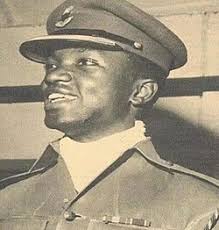
NOT A VILLAIN. NOT A HERO. A LIFE THAT UNSETTLED A PEOPLE.
INTRODUCTION
On 15 January 1966, Nigeria experienced its first military coup, an event that would fracture the
young republic and set in motion decades of political instability, military intervention, and
unresolved historical trauma. Much has been written about the coup—its causes, its execution,
and its far-reaching consequences. These accounts often move quickly across regions and
actors, tracing a chain of events that culminated in civil war and national rupture.
Yet within this familiar narrative, certain figures have been flattened into symbols, their lives
reduced to shorthand explanations for a complex national failure. Among them is Major
Chukwuma Kaduna Nzeogwu, frequently invoked as the face of the coup itself—named, blamed,
and rarely examined with the depth his story demands.
This article takes a different approach. Rather than rehearsing a general chronology of the
coup, it centers on Nzeogwu’s life: his origins, formation, convictions, actions, and death. In
doing so, it does not seek to vindicate him, nor to condemn him outright. Instead, it treats his
biography as a lens through which to interrogate the moral uncertainty of the coup and the
disproportionate burden its aftermath placed on communities far removed from its planning—
particularly the Anioma people of the west bank of the Niger.
By tracing Nzeogwu’s trajectory from birth to battlefield, and situating it within the wider
experience of Anioma communities during and after the Nigerian Civil War, this article argues
that his story is best understood neither as villainy nor heroism, but as a cautionary intersection
of conviction, miscalculation, and historical consequence.
BIRTH WITHOUT A BORDER
Chukwuma Kaduna Nzeogwu was born on 26 February 1937 in Kaduna, a northern colonial city
that shaped him long before Nigeria learned how to name itself. His parents were Anioma—Igbo
speaking people of the west bank of the Niger, from Okpanam near Asaba—yet his earliest
social world was northern, multiethnic, and disciplined by missionary schooling and military
order
From childhood, contradiction followed him. He spoke Hausa fluently, navigated northern
society with ease, and bore the name “Kaduna” not as affectation but as fact. Those who knew
him young remembered seriousness without cruelty, discipline without ostentation. Catholic
education reinforced a moral universe in which right and wrong appeared stark, almost
absolute. That worldview—clear, uncompromising—would later collide with the ambiguities of
politics
Nzeogwu grew up believing Nigeria could be held together by principle if those entrusted with
power were restrained. This belief, sincere and untempered, became the thread that ran
through his life
SOLDIER BEFORE THE NATION
Nzeogwu entered the Nigerian Army in 1957, at a time when the force still bore the imprint of
colonial command and had not yet confronted the burden of sovereignty. He trained first within
the Royal West African Frontier Force system before proceeding to the Royal Military Academy,
Sandhurst, where he was commissioned in 1959 as a second lieutenant.
Sandhurst did more than teach tactics. It instilled in him a strict ethic of command, personal
restraint, and loyalty to institutional order. He returned to Nigeria on the eve of independence,
joining an army expected to defend a democracy that was already fracturing under regional
rivalry, electoral manipulation, and political violence.
His early postings—including service in Enugu and later Kaduna—placed him at the heart of a
restless officer corps. By the early 1960s, Nzeogwu had become Chief Instructor at the Nigerian
Military Training College, Kaduna, responsible for shaping younger soldiers. Colleagues and
subordinates consistently described him as austere, incorruptible, and demanding—more monk
than politician.
Years later, Yakubu Gowon, who knew him personally, would describe Nzeogwu as disciplined
and principled, emphatically rejecting the idea that he was driven by ethnic hatred or personal
ambition. Gowon’s testimony matters not because it excuses the coup, but because it
complicates the caricature.
For Nzeogwu, the army was not merely a profession; it was the last institution he believed
capable of arresting Nigeria’s moral collapse.
JANUARY 1966: INTENT WITHOUT CONTROL
By late 1965, Nigeria’s First Republic was in crisis. The Western Region burned with political
violence. Elections had lost credibility. Within the military, junior officers debated whether
constitutional authority had already failed.
The coup plot that emerged was not a unified conspiracy but a loose alignment of officers
bound by shared frustration rather than a single command structure. Among them were Majors
Emmanuel Ifeajuna, Timothy Onwuatuegwu, Chris Anuforo, Donatus Okafor, Adewale
Ademoyega and Humphrey Okafor.
Nzeogwu’s role was specific and decisive: he planned and led the Northern operation, using the
cover of a training exercise to mobilize troops. His objective was surgical—neutralize what he
perceived as the political epicenter of corruption and regional domination. On the night of 15
January 1966, his forces struck in Kaduna, killing key northern political figures.
What distinguishes Nzeogwu’s actions—without justifying them—is the discipline with which his
operation was conducted. Kaduna civilian testimonies, gathered decades later, consistently
recall that his troops did not loot, did not massacre civilians, and maintained order in the city.
This does not mitigate the killings of political leaders, but it underscores his self-conception: he
believed he was executing a moral intervention, not unleashing chaos.
In his radio broadcast, Nzeogwu framed the coup as a national corrective, not an ethnic
uprising. Yet the coup failed to secure power nationwide. Lagos faltered. Coordination
collapsed. Intent outran control.
What followed was not reform, but rupture.
DEATH BEFORE RECKONING
When Major General Johnson Aguiyi-Ironsi assumed power days later, Nzeogwu did not flee. He
surrendered and was detained, treated with a measure of respect by senior officers who
recognized both his rank and his sincerity. For months, he remained under custody, a symbol of
a coup that had succeeded enough to destroy a republic but failed enough to leave its
architects exposed.
The July 1966 counter-coup transformed everything. Ironsi was killed. Northern officers seized
power. In the chaos that followed, Nzeogwu—once detained—was released. The state no longer
knew what to do with him. Nigeria itself was unraveling.
As massacres of Igbo civilians spread across the North, and regions retreated into fear,
Nzeogwu drifted eastward. When war came in 1967, he aligned with the Eastern forces, not as a
triumphant revolutionary but as a soldier caught by history’s momentum.
On 29 July 1967, near Nsukka, during early engagements of the civil war, Nzeogwu was killed—
just twenty-nine years old. Accounts differ on the precise circumstances, but all agree on the
finality: he died before explanation, before regret, before history could interrogate him fully.
THE ANIOMA BURDEN
For Anioma people, Nzeogwu’s story did not end with his death. It began to weigh heavier.
Anioma communities neither planned nor benefited from the coup. Yet as the war crossed the
Niger, they became sites of suspicion and vengeance. In Asaba, in October 1967, men
summoned under assurances of safety were executed en masse. In Isheagu and neighboring
towns, violence followed the same logic: collective punishment without individual guilt.
Nzeogwu’s Anioma origin did not shield Anioma lives. It complicated their memory. An Anioma
son became a national symbol, and his name—stripped of nuance—was folded into a narrative
that justified atrocity.
NEITHER VILLAIN, NOR HERO
To cast Nzeogwu as a villain is to ignore converging testimonies. Tim Carroll, a foreign civilian
who knew him in Kaduna, described a man uninterested in power, deeply moral, and almost
ascetic—“a man who believed Nigeria was already lost.” Even Ifeajuna, despite his own later
evasions, acknowledged Nzeogwu as the most ideologically driven among the plotters.
Yet to elevate him to heroism is to deny consequence. His certainty cracked a fragile state. His
method—military intervention—opened a door Nigeria has never fully closed.
History allows both truths to stand.
ANIOMA, THEN AND NOW
Today, Anioma people remain politically peripheral and historically misread—often remembered
only through massacre footnotes or contentious figures like Nzeogwu. Their civil war
experience sits uneasily between Eastern and Midwestern narratives, fully claimed by neither.
What persists is silence, and with it, distortion.
To tell Nzeogwu’s story honestly is not to absolve him. It is to resist simplification. And in
resisting simplification, Anioma history re-emerges—not as collateral to national myth, but as a
people who bore the cost of a crisis they did not author.
CLOSING REFLECTION
Nzeogwu’s life warns against moral certainty untempered by political humility. Anioma history
warns against forgetting who paid when certainty failed.
Between the two lies a lesson Nigeria still avoids: that good intentions, when armed and
unchecked, can wound those who never consented to their cause.
History does not need comfort. It needs courage.
REFERENCES:
• Ademoyega, A. Why We Struck. Evans Brothers, 1981
• Carroll, T. “The Nzeogwu I Knew.” Peace Corps Worldwide, oral testimony.
• Gowon, Y. Interviews and public reflections on the 1966 coup (BBC Oral History; Nigerian Army records).
• Iliffe, J.Obasanjo, Nigeria, and the World. James Currey, 2011.
• Siollun, M. Oil, Politics and Violence: Nigeria’s Military Coup Culture. Algora, 2009.
• Siollun, M. “Nigeria’s First Coup: Why Did It Happen?” BBC News, 2016.
• Nigerian Civil War eyewitness accounts and regional histories (Asaba and Isheagu).
INTRODUCTION
On 15 January 1966, Nigeria experienced its first military coup, an event that would fracture the
young republic and set in motion decades of political instability, military intervention, and
unresolved historical trauma. Much has been written about the coup—its causes, its execution,
and its far-reaching consequences. These accounts often move quickly across regions and
actors, tracing a chain of events that culminated in civil war and national rupture.
Yet within this familiar narrative, certain figures have been flattened into symbols, their lives
reduced to shorthand explanations for a complex national failure. Among them is Major
Chukwuma Kaduna Nzeogwu, frequently invoked as the face of the coup itself—named, blamed,
and rarely examined with the depth his story demands.
This article takes a different approach. Rather than rehearsing a general chronology of the
coup, it centers on Nzeogwu’s life: his origins, formation, convictions, actions, and death. In
doing so, it does not seek to vindicate him, nor to condemn him outright. Instead, it treats his
biography as a lens through which to interrogate the moral uncertainty of the coup and the
disproportionate burden its aftermath placed on communities far removed from its planning—
particularly the Anioma people of the west bank of the Niger.
By tracing Nzeogwu’s trajectory from birth to battlefield, and situating it within the wider
experience of Anioma communities during and after the Nigerian Civil War, this article argues
that his story is best understood neither as villainy nor heroism, but as a cautionary intersection
of conviction, miscalculation, and historical consequence.
BIRTH WITHOUT A BORDER
Chukwuma Kaduna Nzeogwu was born on 26 February 1937 in Kaduna, a northern colonial city
that shaped him long before Nigeria learned how to name itself. His parents were Anioma—Igbo
speaking people of the west bank of the Niger, from Okpanam near Asaba—yet his earliest
social world was northern, multiethnic, and disciplined by missionary schooling and military
order
From childhood, contradiction followed him. He spoke Hausa fluently, navigated northern
society with ease, and bore the name “Kaduna” not as affectation but as fact. Those who knew
him young remembered seriousness without cruelty, discipline without ostentation. Catholic
education reinforced a moral universe in which right and wrong appeared stark, almost
absolute. That worldview—clear, uncompromising—would later collide with the ambiguities of
politics
Nzeogwu grew up believing Nigeria could be held together by principle if those entrusted with
power were restrained. This belief, sincere and untempered, became the thread that ran
through his life
SOLDIER BEFORE THE NATION
Nzeogwu entered the Nigerian Army in 1957, at a time when the force still bore the imprint of
colonial command and had not yet confronted the burden of sovereignty. He trained first within
the Royal West African Frontier Force system before proceeding to the Royal Military Academy,
Sandhurst, where he was commissioned in 1959 as a second lieutenant.
Sandhurst did more than teach tactics. It instilled in him a strict ethic of command, personal
restraint, and loyalty to institutional order. He returned to Nigeria on the eve of independence,
joining an army expected to defend a democracy that was already fracturing under regional
rivalry, electoral manipulation, and political violence.
His early postings—including service in Enugu and later Kaduna—placed him at the heart of a
restless officer corps. By the early 1960s, Nzeogwu had become Chief Instructor at the Nigerian
Military Training College, Kaduna, responsible for shaping younger soldiers. Colleagues and
subordinates consistently described him as austere, incorruptible, and demanding—more monk
than politician.
Years later, Yakubu Gowon, who knew him personally, would describe Nzeogwu as disciplined
and principled, emphatically rejecting the idea that he was driven by ethnic hatred or personal
ambition. Gowon’s testimony matters not because it excuses the coup, but because it
complicates the caricature.
For Nzeogwu, the army was not merely a profession; it was the last institution he believed
capable of arresting Nigeria’s moral collapse.
JANUARY 1966: INTENT WITHOUT CONTROL
By late 1965, Nigeria’s First Republic was in crisis. The Western Region burned with political
violence. Elections had lost credibility. Within the military, junior officers debated whether
constitutional authority had already failed.
The coup plot that emerged was not a unified conspiracy but a loose alignment of officers
bound by shared frustration rather than a single command structure. Among them were Majors
Emmanuel Ifeajuna, Timothy Onwuatuegwu, Chris Anuforo, Donatus Okafor, Adewale
Ademoyega and Humphrey Okafor.
Nzeogwu’s role was specific and decisive: he planned and led the Northern operation, using the
cover of a training exercise to mobilize troops. His objective was surgical—neutralize what he
perceived as the political epicenter of corruption and regional domination. On the night of 15
January 1966, his forces struck in Kaduna, killing key northern political figures.
What distinguishes Nzeogwu’s actions—without justifying them—is the discipline with which his
operation was conducted. Kaduna civilian testimonies, gathered decades later, consistently
recall that his troops did not loot, did not massacre civilians, and maintained order in the city.
This does not mitigate the killings of political leaders, but it underscores his self-conception: he
believed he was executing a moral intervention, not unleashing chaos.
In his radio broadcast, Nzeogwu framed the coup as a national corrective, not an ethnic
uprising. Yet the coup failed to secure power nationwide. Lagos faltered. Coordination
collapsed. Intent outran control.
What followed was not reform, but rupture.
DEATH BEFORE RECKONING
When Major General Johnson Aguiyi-Ironsi assumed power days later, Nzeogwu did not flee. He
surrendered and was detained, treated with a measure of respect by senior officers who
recognized both his rank and his sincerity. For months, he remained under custody, a symbol of
a coup that had succeeded enough to destroy a republic but failed enough to leave its
architects exposed.
The July 1966 counter-coup transformed everything. Ironsi was killed. Northern officers seized
power. In the chaos that followed, Nzeogwu—once detained—was released. The state no longer
knew what to do with him. Nigeria itself was unraveling.
As massacres of Igbo civilians spread across the North, and regions retreated into fear,
Nzeogwu drifted eastward. When war came in 1967, he aligned with the Eastern forces, not as a
triumphant revolutionary but as a soldier caught by history’s momentum.
On 29 July 1967, near Nsukka, during early engagements of the civil war, Nzeogwu was killed—
just twenty-nine years old. Accounts differ on the precise circumstances, but all agree on the
finality: he died before explanation, before regret, before history could interrogate him fully.
THE ANIOMA BURDEN
For Anioma people, Nzeogwu’s story did not end with his death. It began to weigh heavier.
Anioma communities neither planned nor benefited from the coup. Yet as the war crossed the
Niger, they became sites of suspicion and vengeance. In Asaba, in October 1967, men
summoned under assurances of safety were executed en masse. In Isheagu and neighboring
towns, violence followed the same logic: collective punishment without individual guilt.
Nzeogwu’s Anioma origin did not shield Anioma lives. It complicated their memory. An Anioma
son became a national symbol, and his name—stripped of nuance—was folded into a narrative
that justified atrocity.
NEITHER VILLAIN, NOR HERO
To cast Nzeogwu as a villain is to ignore converging testimonies. Tim Carroll, a foreign civilian
who knew him in Kaduna, described a man uninterested in power, deeply moral, and almost
ascetic—“a man who believed Nigeria was already lost.” Even Ifeajuna, despite his own later
evasions, acknowledged Nzeogwu as the most ideologically driven among the plotters.
Yet to elevate him to heroism is to deny consequence. His certainty cracked a fragile state. His
method—military intervention—opened a door Nigeria has never fully closed.
History allows both truths to stand.
ANIOMA, THEN AND NOW
Today, Anioma people remain politically peripheral and historically misread—often remembered
only through massacre footnotes or contentious figures like Nzeogwu. Their civil war
experience sits uneasily between Eastern and Midwestern narratives, fully claimed by neither.
What persists is silence, and with it, distortion.
To tell Nzeogwu’s story honestly is not to absolve him. It is to resist simplification. And in
resisting simplification, Anioma history re-emerges—not as collateral to national myth, but as a
people who bore the cost of a crisis they did not author.
CLOSING REFLECTION
Nzeogwu’s life warns against moral certainty untempered by political humility. Anioma history
warns against forgetting who paid when certainty failed.
Between the two lies a lesson Nigeria still avoids: that good intentions, when armed and
unchecked, can wound those who never consented to their cause.
History does not need comfort. It needs courage.
REFERENCES:
• Ademoyega, A. Why We Struck. Evans Brothers, 1981
• Carroll, T. “The Nzeogwu I Knew.” Peace Corps Worldwide, oral testimony.
• Gowon, Y. Interviews and public reflections on the 1966 coup (BBC Oral History; Nigerian Army records).
• Iliffe, J.Obasanjo, Nigeria, and the World. James Currey, 2011.
• Siollun, M. Oil, Politics and Violence: Nigeria’s Military Coup Culture. Algora, 2009.
• Siollun, M. “Nigeria’s First Coup: Why Did It Happen?” BBC News, 2016.
• Nigerian Civil War eyewitness accounts and regional histories (Asaba and Isheagu).
Adim Abuah
Software Developer, Writer
No comments yet.