History
View all in History
ANIOMA PEOPLE: A HISTORICAL BACKGROUND (1)
By FAVOUR OBIRINMA NWANNE on December 15, 2025
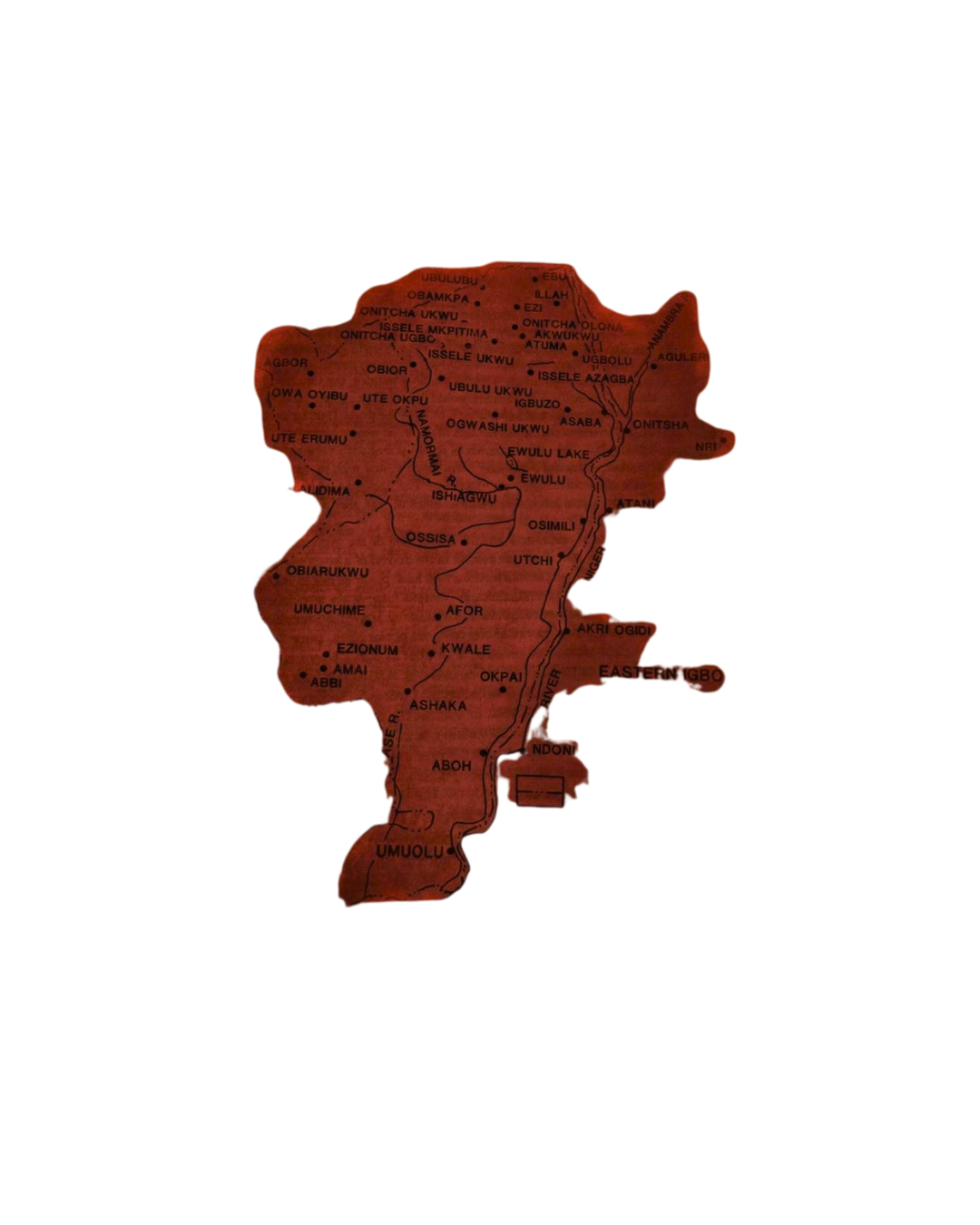
The Anioma people are a group of tribes that share similar cultural realities and linguistic
expression and are located in present day Delta State, Nigeria.The name Anioma is an acronym
used to represent the tribes that fall under the Anioma group. ANIOMA is an acronym for Aniocha, Ndokwa, Ika, Oshimili, MA stands for good. Literally, Anioma means “good land” The coinage was made in 1951 by an Asaba man— Chief Dennis Osadebey, premier of the then mid-western region.
The area inhabited by the Anioma people is presently referred to as the Delta North senatorial district, comprises nine local government areas (LGAs): Aniocha North, Aniocha South, Ika Northwest, Ika South, Ukwani, Ndokwa East, Ndokwa West, Oshimili South and Oshimili
North. Anioma is bounded in the Northeast at Ika South by Agbazilo and Okpebhol LGAs, in the
east at Oshimili South and Ndokwa East by the River Niger, and in the southwest and South at
Ndokwa East and Ndokwa west LGAs by Orhionmwom, Ethiope East, Ughelli North, Isoko North
and Isoko south LGAs. The Anioma people have a distinct cultural and historical background that is often a result of migration and its interaction with neighbours such as the Benins, the Igbos, the Igalas, the Yoruba and even the Esan people.
Although the Anioma people identify as a distinct ethnic group, some parts of Anioma speak related languages to the Igbo language and other igboid languages. The linguistic reality of the Anioma people has given credence to the historical belief that the present day people of Anioma migrated westward across the Niger, especially from the ancient Nri kingdom in present day Anambra state. There are also other accounts of the origin of the Anioma people that bear strong links with the Benin kingdom. Despite the Benin origin story and the Igbo origin story seem to be the overwhelming majority of the linguistic speakers in Anioma land, other languages that are related to Yoruba and the Igala people can also be found in Anioma land. An example is the olukumi people who speak a variety of the Yoruba language and identify as a distinct ethnic group.
The Anioma people have a vibrant culture which includes several festivals, distinct ways of
dressings, marriage systems, administrative systems, different local dishes domesticated to the
various tribes in Anioma land and a set of value systems that recognises the existence of the
spiritual realm and the need for community. Just like many African societies, Anioma people are
communal and have long been farmers, traders, blacksmiths etc since time immemorial. Despite
modernisation, Anioma people continue to bask in their identity and traditions, celebrating core
festivals like the New Yam festivals and expanding the culture of trade and hard work that has
always been a part and parcel of the people.
THE ORIGIN STORY OF ANIOMA PEOPLE: MIGRATIONS AND SETTLEMENTS
There are different scholarly opinions about the history of the anioma people but one thing stands clear among them - that the anioma people are largely a product of migration and eventual settlement. Anioma as a geographical location is also regarded as Western igbo because of its proximity to the core east across the River Niger. The Anioma people are also widely regarded as part of the broader Igbo nation—those who inhabit the western banks of the Lower Niger River. Some Anioma people are regarded as the descendants of Igbo migrants who, from as early as the 9th century A.D., began crossing the river in response to land scarcity, population pressure, and environmental challenges.
The influence of the Benin empire can not also be overlooked. Infact, scholars like Uwakina place the Benin as central in the origin story of places like Agbor in Anioma land as he states that "in the whole of the Ika land for instance, traces abound in the presences and influences of Benin people in the origin. Even the kingdoms that claim Nri (Igbo) factors or mixed migration still have Bini or Dein associated with their names, in their villages, especially among the royal Quarters." The origin story of people of Anioma can therefore be said to be varied and tied to larger kingdoms which may have had more military might with established kingdoms to have been able to found new towns outside its initial jurisdiction. The Benin and Igbo origin story are predominant in the oral history of the Anioma people, even though there are other groups within Anioma land who trace their origin to neither and locate themselves within other traditions such as the Yoruba culture, the Igala culture and the Esan culture. This makes Anioma land a place of differing influences, although the Benin and Igbo influence stand out amongst many.
The western migration of people from the core east was not an isolated event as it unfolded in
waves, often driven by deeply personal, spiritual, or political motives. Oral traditions, the primary source of precolonial Anioma history, reveal that the founding fathers and mothers of many Anioma towns were exiles, fugitives, ritual specialists, or hunters. They had step up communities to build new lives and this has flourished into the modern day Anioma people. Each journey was guided not just by necessity but by sacred rituals, especially the symbolic use of pots of medicine to determine settlement spots.
The symbolism of the pot can be found in the account of the founding of Ibusa as the community traces its origin to a man named Umejei. It was said that Umejei had reportedly fled his homeland—Isu, after committing murder in a fit of rage. Betrayed by rumors of infidelity
involving his wife, Umejei acted in fury and paid the price. The law demanded either death by
hanging or exile. In a different version of the Igbuzo traditions, Umejei sapposedly killed a man
during a wrestling contest. Regardless of which oral history is more accurate, to the people of lsu, killing, whether wilful or accidental, was a serious transgression against the earth goddess, ani. No one ever got away with murder in Isu. Joined by his sister Onuoha, her husband Anyala Obum, and other loyal kin, Umejei crossed the Niger. Guided by ritual pots of medicine, the group settled at Omeze, present-day Igbuzo, where Onuoha’s pot fell—hence, the name Igbobinuzo which means Igbos living along the road. Together, they laid the foundations of what would become one of the most prominent Anioma towns.
Another powerful migration story is that of Ogwashi-Uku and Ogboli which began in the sacred
land of Nri, a renowned spiritual center in eastern Igboland. Two brothers—Odaigbo and Edini,
sons of Eze Nshi, faced exile when Odaigbo committed murder. Some accounts states that Edini
was, instead, Odaigbo’s sister. According to custom, the shedding of a kinsman’s blood required either execution or banishment. Their mother, to spare her sons, chose exile. Each was given a pot of medicine with a divine instruction: settle wherever the pot falls and breaks. Edini’s pot fell near Ani Udo, marking the birth of Ogboli, a village presently located in Igbuzo. Odaigbo’s pot later broke near Eke, giving rise to Ogwashi-Ukwu. After several years, Odaigbo became father to four sons: Dei, Eshe, Ase, and Etumukwu. These sacred vessels did more than guide their steps; they symbolized divine approval and ancestral guidance, reaffirming the Igbo origin story of the Anioma people.
This account forms only the first part of a broader historical exploration. As the story continues, we will examine other migration traditions and the ways memory, place, and identity intersect across Anioma communities. Readers are invited to engage with this post, share their thoughts, questions, or reflections—and to follow People of Anioma across our social media platforms for updates, discussions, and the release of the next installment.
expression and are located in present day Delta State, Nigeria.The name Anioma is an acronym
used to represent the tribes that fall under the Anioma group. ANIOMA is an acronym for Aniocha, Ndokwa, Ika, Oshimili, MA stands for good. Literally, Anioma means “good land” The coinage was made in 1951 by an Asaba man— Chief Dennis Osadebey, premier of the then mid-western region.
The area inhabited by the Anioma people is presently referred to as the Delta North senatorial district, comprises nine local government areas (LGAs): Aniocha North, Aniocha South, Ika Northwest, Ika South, Ukwani, Ndokwa East, Ndokwa West, Oshimili South and Oshimili
North. Anioma is bounded in the Northeast at Ika South by Agbazilo and Okpebhol LGAs, in the
east at Oshimili South and Ndokwa East by the River Niger, and in the southwest and South at
Ndokwa East and Ndokwa west LGAs by Orhionmwom, Ethiope East, Ughelli North, Isoko North
and Isoko south LGAs. The Anioma people have a distinct cultural and historical background that is often a result of migration and its interaction with neighbours such as the Benins, the Igbos, the Igalas, the Yoruba and even the Esan people.
Although the Anioma people identify as a distinct ethnic group, some parts of Anioma speak related languages to the Igbo language and other igboid languages. The linguistic reality of the Anioma people has given credence to the historical belief that the present day people of Anioma migrated westward across the Niger, especially from the ancient Nri kingdom in present day Anambra state. There are also other accounts of the origin of the Anioma people that bear strong links with the Benin kingdom. Despite the Benin origin story and the Igbo origin story seem to be the overwhelming majority of the linguistic speakers in Anioma land, other languages that are related to Yoruba and the Igala people can also be found in Anioma land. An example is the olukumi people who speak a variety of the Yoruba language and identify as a distinct ethnic group.
The Anioma people have a vibrant culture which includes several festivals, distinct ways of
dressings, marriage systems, administrative systems, different local dishes domesticated to the
various tribes in Anioma land and a set of value systems that recognises the existence of the
spiritual realm and the need for community. Just like many African societies, Anioma people are
communal and have long been farmers, traders, blacksmiths etc since time immemorial. Despite
modernisation, Anioma people continue to bask in their identity and traditions, celebrating core
festivals like the New Yam festivals and expanding the culture of trade and hard work that has
always been a part and parcel of the people.
THE ORIGIN STORY OF ANIOMA PEOPLE: MIGRATIONS AND SETTLEMENTS
There are different scholarly opinions about the history of the anioma people but one thing stands clear among them - that the anioma people are largely a product of migration and eventual settlement. Anioma as a geographical location is also regarded as Western igbo because of its proximity to the core east across the River Niger. The Anioma people are also widely regarded as part of the broader Igbo nation—those who inhabit the western banks of the Lower Niger River. Some Anioma people are regarded as the descendants of Igbo migrants who, from as early as the 9th century A.D., began crossing the river in response to land scarcity, population pressure, and environmental challenges.
The influence of the Benin empire can not also be overlooked. Infact, scholars like Uwakina place the Benin as central in the origin story of places like Agbor in Anioma land as he states that "in the whole of the Ika land for instance, traces abound in the presences and influences of Benin people in the origin. Even the kingdoms that claim Nri (Igbo) factors or mixed migration still have Bini or Dein associated with their names, in their villages, especially among the royal Quarters." The origin story of people of Anioma can therefore be said to be varied and tied to larger kingdoms which may have had more military might with established kingdoms to have been able to found new towns outside its initial jurisdiction. The Benin and Igbo origin story are predominant in the oral history of the Anioma people, even though there are other groups within Anioma land who trace their origin to neither and locate themselves within other traditions such as the Yoruba culture, the Igala culture and the Esan culture. This makes Anioma land a place of differing influences, although the Benin and Igbo influence stand out amongst many.
The western migration of people from the core east was not an isolated event as it unfolded in
waves, often driven by deeply personal, spiritual, or political motives. Oral traditions, the primary source of precolonial Anioma history, reveal that the founding fathers and mothers of many Anioma towns were exiles, fugitives, ritual specialists, or hunters. They had step up communities to build new lives and this has flourished into the modern day Anioma people. Each journey was guided not just by necessity but by sacred rituals, especially the symbolic use of pots of medicine to determine settlement spots.
The symbolism of the pot can be found in the account of the founding of Ibusa as the community traces its origin to a man named Umejei. It was said that Umejei had reportedly fled his homeland—Isu, after committing murder in a fit of rage. Betrayed by rumors of infidelity
involving his wife, Umejei acted in fury and paid the price. The law demanded either death by
hanging or exile. In a different version of the Igbuzo traditions, Umejei sapposedly killed a man
during a wrestling contest. Regardless of which oral history is more accurate, to the people of lsu, killing, whether wilful or accidental, was a serious transgression against the earth goddess, ani. No one ever got away with murder in Isu. Joined by his sister Onuoha, her husband Anyala Obum, and other loyal kin, Umejei crossed the Niger. Guided by ritual pots of medicine, the group settled at Omeze, present-day Igbuzo, where Onuoha’s pot fell—hence, the name Igbobinuzo which means Igbos living along the road. Together, they laid the foundations of what would become one of the most prominent Anioma towns.
Another powerful migration story is that of Ogwashi-Uku and Ogboli which began in the sacred
land of Nri, a renowned spiritual center in eastern Igboland. Two brothers—Odaigbo and Edini,
sons of Eze Nshi, faced exile when Odaigbo committed murder. Some accounts states that Edini
was, instead, Odaigbo’s sister. According to custom, the shedding of a kinsman’s blood required either execution or banishment. Their mother, to spare her sons, chose exile. Each was given a pot of medicine with a divine instruction: settle wherever the pot falls and breaks. Edini’s pot fell near Ani Udo, marking the birth of Ogboli, a village presently located in Igbuzo. Odaigbo’s pot later broke near Eke, giving rise to Ogwashi-Ukwu. After several years, Odaigbo became father to four sons: Dei, Eshe, Ase, and Etumukwu. These sacred vessels did more than guide their steps; they symbolized divine approval and ancestral guidance, reaffirming the Igbo origin story of the Anioma people.
This account forms only the first part of a broader historical exploration. As the story continues, we will examine other migration traditions and the ways memory, place, and identity intersect across Anioma communities. Readers are invited to engage with this post, share their thoughts, questions, or reflections—and to follow People of Anioma across our social media platforms for updates, discussions, and the release of the next installment.
FAVOUR OBIRINMA NWANNE
Published Writer, Editor and Lecturer
Adim_abuah
This is so informative. Keep it up 👍🏽
4 weeks, 2 days ago
Amazing piece 😊
4 weeks, 2 days ago
Wonderful, wish more people can get to know see this soon enough.
4 weeks, 2 days ago
This history is a great one But we have to research more on Ndokwa/Ukwuani axis Like the towns and villages in map is incomplete
4 weeks, 2 days ago